
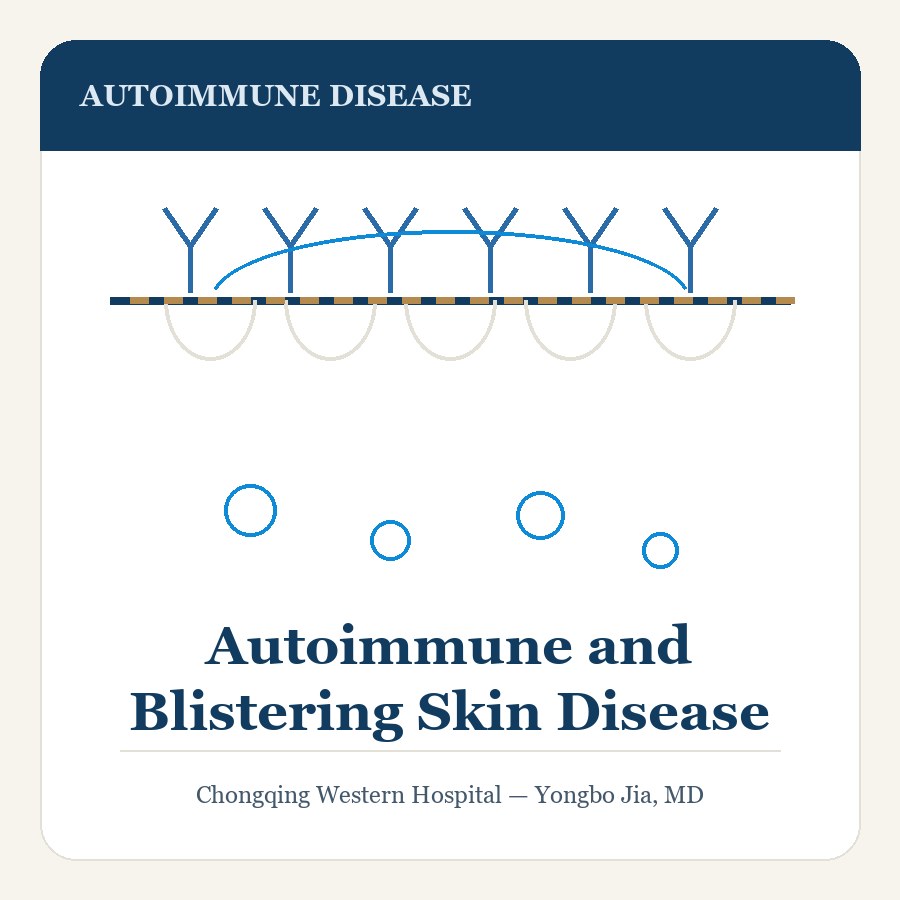
In short. Cutaneous lupus, scleroderma-related skin change and pemphigus: uncommon, sometimes serious conditions in which the diagnosis usually cannot be made by looking alone.
Key points
- These conditions are confirmed by taking a small skin sample and examining it both under the microscope and with direct immunofluorescence, sometimes with blood antibody tests alongside.
- That is not bureaucracy: the conditions resemble one another but are treated differently, and this is not a treatment to start on a guess.
Autoimmune skin disease happens when the immune system attacks the skin itself. It is uncommon, it is often serious, and it is the group of conditions in which the difference between a dermatologist and a general clinic is largest — because the diagnosis usually cannot be made by looking alone.
Cutaneous lupus
Lupus affecting the skin produces well-defined red, scaly, often photosensitive plaques, most typically on the face, ears, scalp and sun-exposed arms. Some forms scar and cause permanent hair loss if they are not treated. Cutaneous lupus may occur on its own or as part of systemic lupus, in which joints, kidneys and blood are also involved, so a skin diagnosis often prompts blood tests and a look beyond the skin.
Scleroderma-related skin
In scleroderma the skin thickens and tightens, commonly beginning in the fingers, where it can cause swelling, stiffness and colour change in the cold. When skin tightening remains limited to the hands and face, the outlook differs from the diffuse form, and that distinction has real consequences. Assessment looks for lung, heart, kidney and swallowing involvement, because those determine what the disease will do over the next decade.
Pemphigus and blistering disease
Pemphigus is a group of conditions in which the immune system attacks the attachments that hold skin cells together, so the skin separates and blisters. It often begins with painful erosions in the mouth, which is why patients are sometimes first seen by a dentist. Blistering disease of this kind is treated with systemic immunosuppression and needs specialist follow-up. Because these conditions can involve organs beyond the skin, the dermatologist and the hospital’s other specialties often work on the same patient at the same time.
Why the diagnosis needs confirmation
These conditions are confirmed by taking a small skin sample and examining it both under the microscope and with direct immunofluorescence, sometimes with blood antibody tests alongside. That is not bureaucracy: the conditions resemble one another but are treated differently, and this is not a treatment to start on a guess.
Treatment is long. It aims at control rather than cure, and it carries monitoring requirements. Most patients are managed over years, and a relapse during reduction of treatment is expected rather than a sign that the plan has failed.
Seek urgent assessment if
- Painful mouth ulcers or erosions persist, or blistering affects the mouth, eyes or genitals.
- Skin blisters or peeling are widespread, or appear together with fever.
- Skin tightening spreads quickly beyond the fingers, or comes with breathlessness or difficulty swallowing.
Frequently asked questions
Why can these conditions not be diagnosed by looking alone?
Because they resemble one another but are treated differently. Confirmation needs a small skin sample examined both under the microscope and with direct immunofluorescence, sometimes with blood antibody tests alongside. This is not a treatment to start on a guess.
Why does a skin diagnosis prompt tests beyond the skin?
Cutaneous lupus may occur on its own or as part of systemic lupus, in which joints, kidneys and blood are also involved. In scleroderma, assessment looks for lung, heart, kidney and swallowing involvement, because those determine what the disease will do over the next decade.
How long does treatment for blistering disease last?
It is long, it aims at control rather than cure, and it carries monitoring requirements. Most patients are managed over years, and a relapse during reduction of treatment is expected rather than a sign that the plan has failed. It needs specialist follow-up.
Risks & Limitations
- Most chronic skin disease is managed rather than cured, and relapse is expected.
- Treatments typically need 8–12 weeks before response can be judged fairly.
- Topical treatment can cause irritation, dryness, peeling and photosensitivity.
- Systemic therapy may require blood monitoring and carries organ, metabolic and pregnancy risks.
- Isotretinoin in particular requires strict monitoring and pregnancy prevention.
- Pigment change is often slow and may be incomplete.
- No treatment works for everyone, and response cannot be predicted with certainty.
When to Seek Care
- A mole or lesion that changes in size, shape or colour, or starts to bleed, itch or crust.
- Fever with a widespread rash, blistering, or rash involving the eyes, mouth or genitals — seek emergency care.
- Rapidly spreading redness, swelling or pain in the skin.
- Facial swelling or difficulty breathing — possible severe reaction; seek emergency care immediately.
- New or worsening symptoms while taking a monitored medication.
References & Further Reading
- American Academy of Dermatology (AAD) — public and clinical guidance
- World Health Organization (WHO) — skin and infectious disease resources
- Chinese Medical Association, Dermatology Branch — clinical guidance
- Cochrane Library — systematic reviews in dermatology
This page is patient education, not medical advice, and it does not cite individual studies. Discuss your own case with a qualified clinician. To arrange an assessment at Chongqing West District Hospital, see Contact & Consultation.